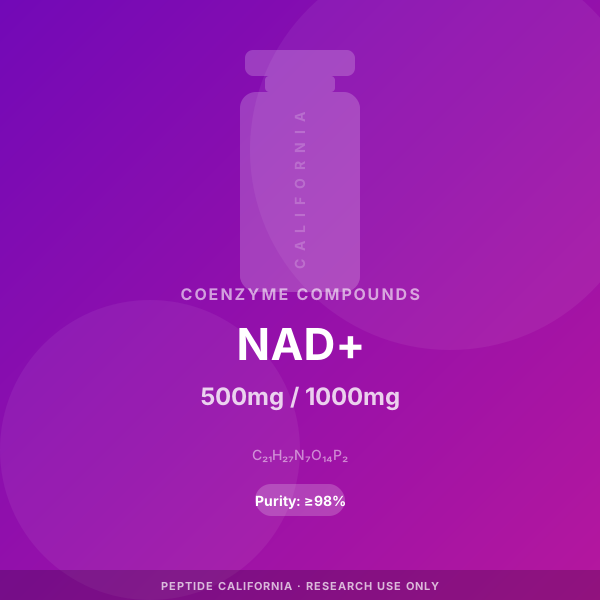
NAD+ (Nicotinamide Adenine Dinucleotide) is a coenzyme present in all living cells that serves a central role in cellular energy metabolism. It functions as an electron carrier in metabolic redox reactions and is a required co-substrate for sirtuins (SIRT1-7), PARPs, and CD38. NAD+ levels are studied in the context of cellular senescence pathways, DNA damage response signaling, and mitochondrial function.
Research Applications: Cellular metabolism studies, sirtuin pathway research, DNA damage response signaling studies, mitochondrial bioenergetics research, NAD+ biosynthesis pathway analysis.
For research use only. Not for human consumption. This product is intended solely for laboratory and scientific research by qualified professionals.
Certificate of Analysis
Batch Number: VS2320250711-100
Date of Analysis: July 2025
Download COA (PDF)
Each batch of our products undergoes rigorous quality testing including HPLC purity analysis and mass spectrometry verification. COAs are available for all current and recent batches.
Published Research References
The following peer-reviewed publications reference this peptide in research contexts. These citations are provided for informational purposes only and do not constitute claims of efficacy.
Research references for this product are being compiled. Check back soon or contact us for research literature related to this peptide.
Handling & Storage Guidelines
| Storage (Lyophilized) | -20°C, protected from light and moisture |
| Storage (Reconstituted) | 2-8°C for up to 14 days; -20°C for long-term storage. Avoid repeated freeze-thaw cycles. |
| Reconstitution | Reconstitute in sterile bacteriostatic water or appropriate buffer per your research protocol. |
| Handling | Handle under aseptic conditions in a laminar flow hood when possible. Use appropriate PPE. |
| Shipping | Shipped with cold packs. Inspect packaging upon receipt and transfer to proper storage immediately. |
Laboratory Use OnlyThis product is not intended for human or animal administration. Handle in accordance with your institution's safety protocols and applicable regulations.